In tactical survival horror, a procedural level generator cannot simply assemble random square rooms connected by corridors. If a starship does not feel like an authentic, manufactured vessel that once housed dozens of engineers, scientists, or soldiers, the psychological immersion fractures immediately.
In this transmission, we explore the procedural generation architecture powering Iron Graves in Godot Engine 4: from architectural room zoning and vessel hull profiles to interconnected power conduits, electrical short-circuits, explosive decompression dynamics, and 3D sensory pathfinding.
1. Designing Believable Hulls: Vessel Archetypes
When your salvage shuttle clamps onto an unknown contact in deep space, the vessel's hull geometry is determined by its historical archetype. In Iron Graves, derelicts aren't generic dungeons; they follow strict engineering logic:
- Military Frigates & Cruisers: Narrow fortified choke-points, armored blast doors, weapon mounts, security armories, and redundant airlock redundancies.
- Industrial Ore Refineries: Expansive multi-story cargo holds, processing vats, heavy mechanical conveyor tracks, and hazardous fuel conduit lines.
- Medical Research Arks: Decontamination ante-rooms, cryogenic storage bays, quarantine observation chambers, and bio-hazard containment isolation units.
- Colony Transports: Labyrinthine crew quarters, civilian cafeterias, life-support greenhouses, and long central spine corridors.
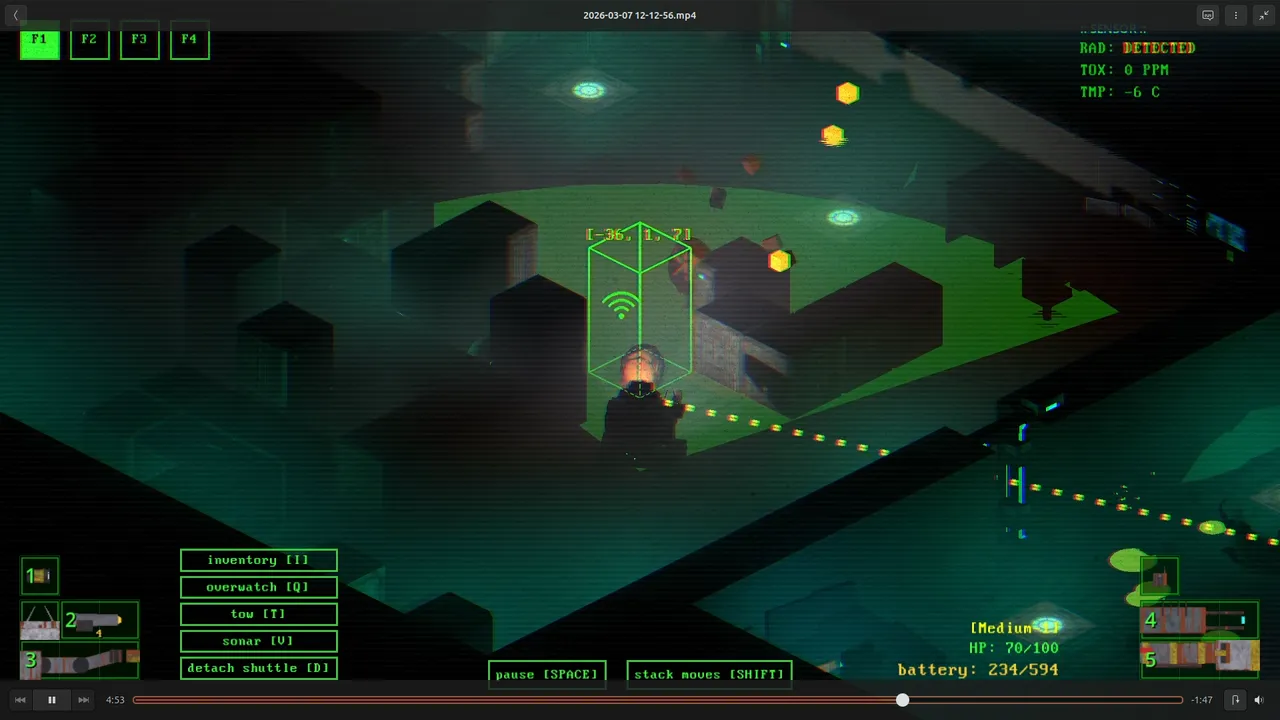 Figure 1: Navigating a procedurally generated corridor — atmospheric volumetric fog and flickering emergency lighting in Godot 4 Forward+.
2. The Generation Pipeline: From Room Graphs to 3D Geometry
Our procedural generator in Godot 4 operates in discrete architectural passes to guarantee both solvability and high tactical tension:
- Graph Layout & Cycle Pruning: Rooms are placed via a constrained Delaunay triangulation and Minimum Spanning Tree (MST) graph, with selective cross-connections added to create tactical loops and flanking routes.
- Airlock & Breach Point Placement: Shuttle docking points and exterior airlocks are calculated along outer perimeter boundaries, ensuring operators have multiple potential entry points depending on sensor readings.
- Decay & Structural Damage Pass: Depending on the ship's decay age (from recent battle casualties to century-old ancient drifting tombs), ceilings collapse, floor tiles rupture, and structural dust piles accumulate against bulkheads.
- Dynamic Prop & Electronic Spawning: Terminals, scrap piles, charging docks, and defense turrets are seeded using deterministic pseudo-random seeds, ensuring every component has valid line-of-sight and collision boundaries.
[PROC_GEN] SEED: 0x8F4A21 // CLASS: HEAVY REFINERY (DECAY LVL: 2)
1. MST Graph Resolved: 14 Rooms, 19 Bulkhead Connections (5 Flank Loops)
2. Docking Airlock Placed at Sector Alpha (Port Side Clamp)
3. Power Conduit Graph: 1 Main Generator -> 3 Sub-Station Junctions
4. Atmospheric Pressure: 4 Rooms Pressurized | 7 Depressurized | 3 Toxic Gas
5. Hazard Seeds: 2 Electrical Conduits Damaged | 1 Bio-Infestation Hive Detected
3. Simulating the Living Ship: The Power Conduit Network
One of the defining mechanics in Iron Graves is that a derelict is not dead — it is dormant.
Every starship features a simulated electrical power grid. Auxiliary generators provide finite voltage. When your salvage drone activates a terminal in Room A, power does not magically appear: it travels through simulated physical conduits in the walls and floor.
This creates urgent tactical dilemmas:
- Blown Breakers & Overloads: Powering up heavy blast doors can overload fragile junction boxes, plunging adjacent sectors into total darkness.
- Electrical Short Circuits (
ShortCircuitFire): Damaged power conduits can spark into raging electrical fires when energized, threatening drone electrical components while creating thermal barriers that block hostile organisms. - Sensor Trade-offs: Do you route power to the long-range radar dish to reveal neighboring compartments, or preserve generator cells for drone recharge stations?
4. Atmospheric Hazards & Tactical Decompression
Vacuum is an omnipresent threat. When you breach an airlock or puncture a damaged observation viewport, the atmosphere rapidly depressurizes.
Rather than treating pressure as a binary toggle, Iron Graves models chamber pressure as a propagating hazard:
- Explosive Decompression: Opening an outer airlock into an unsealed pressurized sector creates an inward vacuum torrent, dragging unsecured scrap, debris, and fragile bio-entities toward the void.
- Airlock Trapping: Clever operators can lure aggressive alien stalkers into an airlock chamber, seal the inner blast door remotely, and cycle the outer valve — purging the predator into deep space without firing a single shot.
- Toxic & Corrosive Atmospheres: Ruptured coolant lines leak volatile gases that erode drone plating and scramble visual cameras, forcing you to rely entirely on acoustic tracking and motion pings.
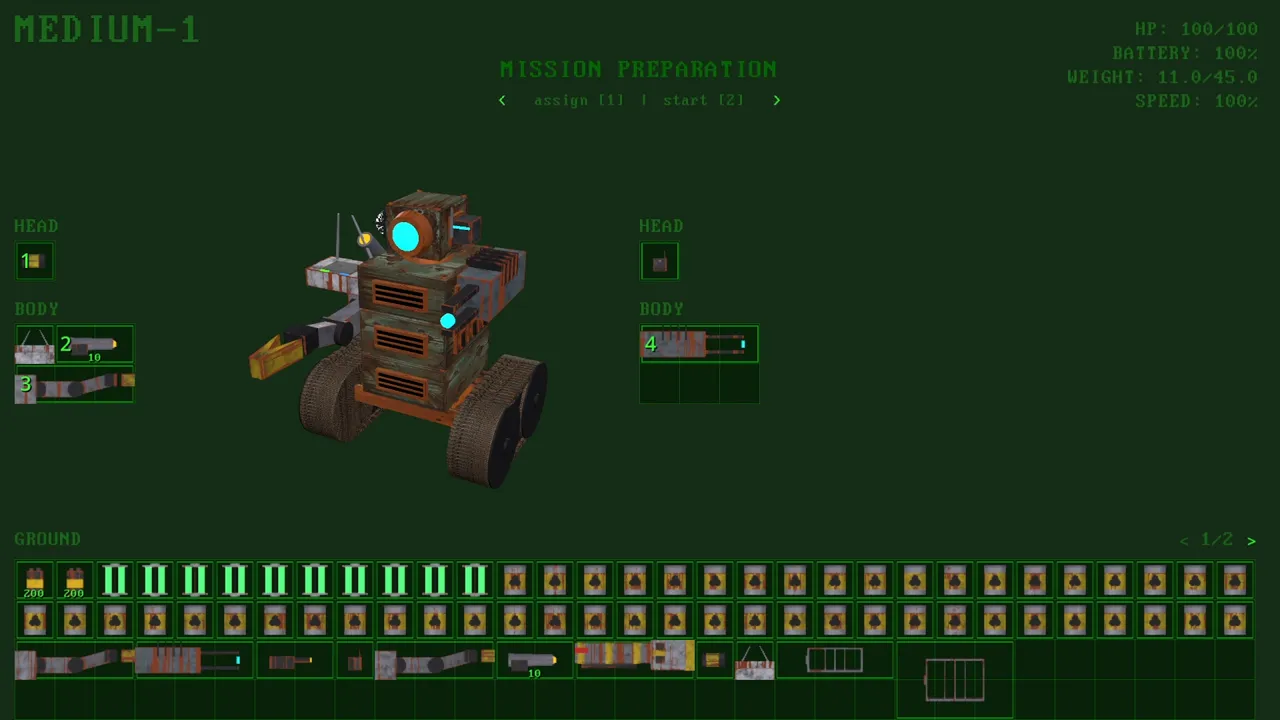 Figure 2: Remote drone camera feed — monitoring power junction status while listening for structural groans and bio-movement.
5. Performance Optimization: High-Speed Destruction in Godot 4
When drones detonate explosive charges or high-velocity rounds strike server racks, generating real-time physics collisions can quickly cripple frame rates.
In our Godot 4 implementation, we replaced standard runtime convex hull generation (mesh.create_convex_shape()) with an optimized, pre-calculated Axis-Aligned Bounding Box (AABB) physics system. This allows dozens of debris fragments, severed conduits, and collapsing props to scatter across the chamber with zero latency spikes or stuttering — ensuring buttery-smooth 60+ FPS on both desktop rigs and the Steam Deck.
6. What Lies Ahead in Transmission #003
In our next developer transmission, we break down the Modular Drone Engineering & Upgrade System: scrap salvaging, CPU processing tier modules, EMP pulse capacitors, acoustic sonar arrays, and how drone loss impacts your long-term roguelite expedition.
>> Transmission #003: Modular Drone Engineering & Permadeath Stakes →
>> Transmission #004: Void Ecology & Alien Predator AI →
OPERATOR ACTION REQUIRED: WISHLIST ON STEAM
Every single Steam Wishlist directly boosts Iron Graves in the Steam algorithm and accelerates our development journey. If you value deep, atmospheric sci-fi tactical horror, join us on the mission today.