In traditional survival games, the avatar is a fragile biological human. In Iron Graves, you are a remote operator sitting safely behind the command terminal of your salvage shuttle. Your hands, eyes, and weapons are remote industrial drones: autonomous chassis of hardened titanium, exposed wiring, and noisy servomotors sent into pitch-black derelicts to scavenge what remains.
When fans of Duskers remember their favorite expeditions, it was rarely about twitch reflexes. It was about intimate connection with their drones: knowing that Unit 1 was an irreplaceable high-speed scout equipped with long-range motion sensors, Unit 2 was a lumbering brute packing a salvage pry-bar, and Unit 3 was a patched-up emergency generator.
In this transmission, we explore how we designed and implemented the Modular Drone Engineering System in Godot 4: socket configurations, energy budgets, sensory feeds, signal recovery, and the haunting reality of permadeath fleet attrition.
1. The Operator's Dilemma: Disposable Steel vs. Precious Assets
Every drone in your expeditionary hangar represents a delicate balance between cost and capability. Send an un-upgraded bare chassis into an uncharted derelict, and it may be torn apart by an alien stalker before it even locates the first scrap container. But over-equip a drone with your rarest sensor chips and high-grade capacitor cells, and losing that unit to an unexpected airlock blowout or electrical surge can cripple your entire expedition run.
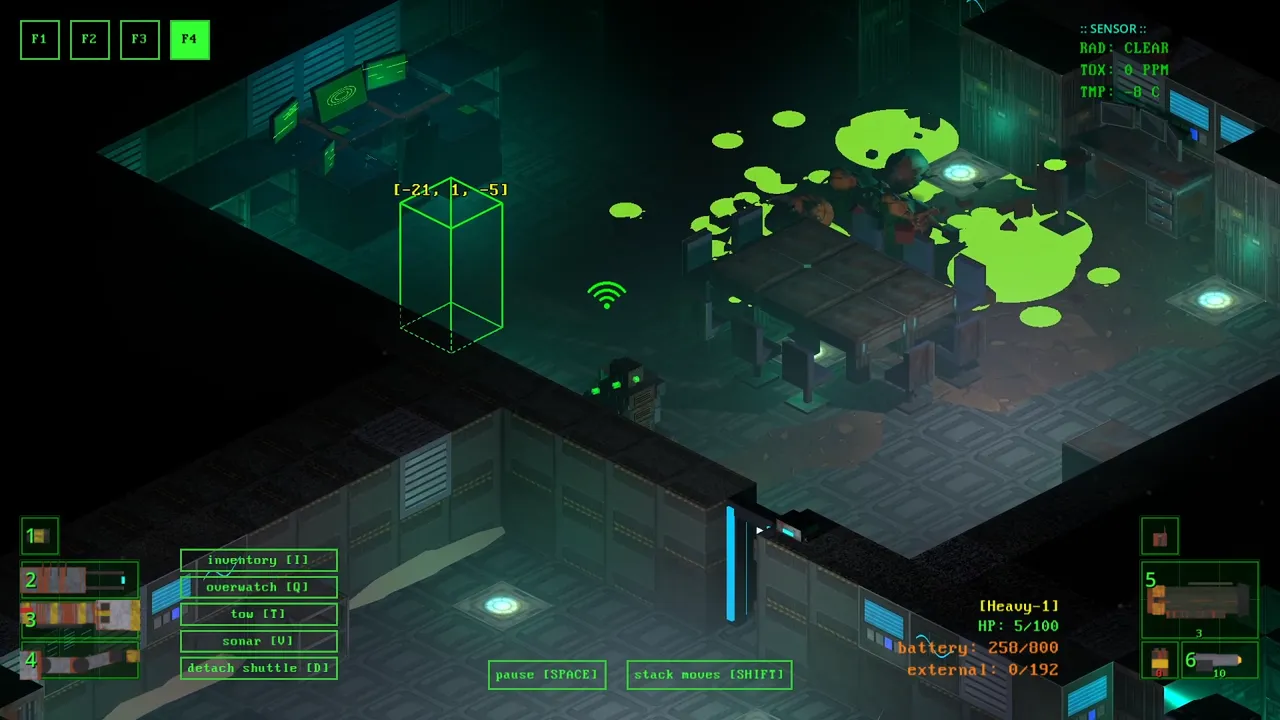 Figure 1: Tactical Operator Terminal — tracking multi-unit status telemetry, power junction conduits, and compartment sensor pings.
2. Modular Socket Architecture: Anatomy of a Salvage Drone
Drones in Iron Graves are fully modular machines built upon five core functional sockets:
- Chassis & Torso Frame: Governs base structural integrity (HP), internal socket capacity, and armor plating thickness. Lightweight reconnaissance frames offer swift acceleration but buckle under direct physical trauma, while heavy industrial excavators resist blunt impacts at the cost of high power consumption.
- Locomotion / Thruster Assembly: Determines movement speed, rotational agility, and acoustic noise emission. Tank-style magnetic treads traverse ruptured deck plates with ease, while omni-directional magnetic levitators glide silently across polished medical bays without triggering vibration-sensitive organisms.
- Power Core & Capacitor Unit: Auxiliary batteries dictate operational autonomy. When a drone operates far from the shuttle's umbilical charging station, every meter traveled and every sensor sweep drained drains volatile megawatt-hours.
- Sensory & Telemetry Suite: The eyes and ears of the operator. Options range from standard optical cameras and acoustic microphone pickups to active ultrasound sonars, infrared thermals, and magnetic flux detectors.
- Utility & Tactical Manipulators: The tool slot that defines the drone's role: heavy-duty salvage clamps, hydraulic pry-arms for jammed bulkheads, remote terminal interface data-spikes, or emergency EMP pulse emitters.
[UNIT ID: DRONE-01 // SERIAL: CG-4492-B]
+ CHASSIS     : Reinforced Industrial Torso (Integrity: 100/100 HP | Mass: 420 kg)
+ LOCOMOTION  : Heavy Mag-Treads (Noise Profile: 68 dB | Max Vel: 4.2 m/s)
+ POWER CORE  : Micro-Fission Cell (Output: 120 kW | Drain Rate: 1.4 kW/s)
+ SENSOR      : Pulse-Echo Sonar Array (Range: 18m | Ping Cooldown: 3.5s)
+ UTILITY 1   : Pneumatic Salvage Clamp (Prying Torque: 850 Nm)
+ UTILITY 2   : EMP Surge Capacitor (Charge: 1/1 | Stun Radius: 6.0m)
[STATUS: READY FOR AIRLOCK DEPLOYMENT // DOCK BAY ALPHA]
3. Sensory Reconnaissance: Battling Blindness in 3D Space
One of our biggest engineering challenges in bringing the Duskers experience to 3D was preserving the psychological terror of limited information. In top-down 2D, fog of war is a flat silhouette. In full volumetric 3D, darkness is an oppressive physical presence.
Standard optical video cameras mounted on drone turrets are easily obscured by atmospheric dust, ruptured coolant mist, or total electrical failure. To survive, operators must master alternative sensory tools:
- Acoustic Listening Feeds: High-gain directional microphones capture structural groans, clicking claws in air vents, and airlock pressure leaks. Audio spatialization in Godot 4 allows players to locate lurking predators purely by sound.
- Pulse-Echo Sonar: Emits an omnidirectional acoustic ping that briefly paints the 3D geometry of adjacent chambers on your CRT monitor. The deadly trade-off: bio-predators in the dark are hypersensitive to ultrasound vibrations and will stalk straight toward the source of the ping.
- Infrared Thermal Imaging: Cuts through thick atmospheric smoke and toxic gas leaks, highlighting overheated electrical conduits and warm biological signatures nesting in dark alcoves.
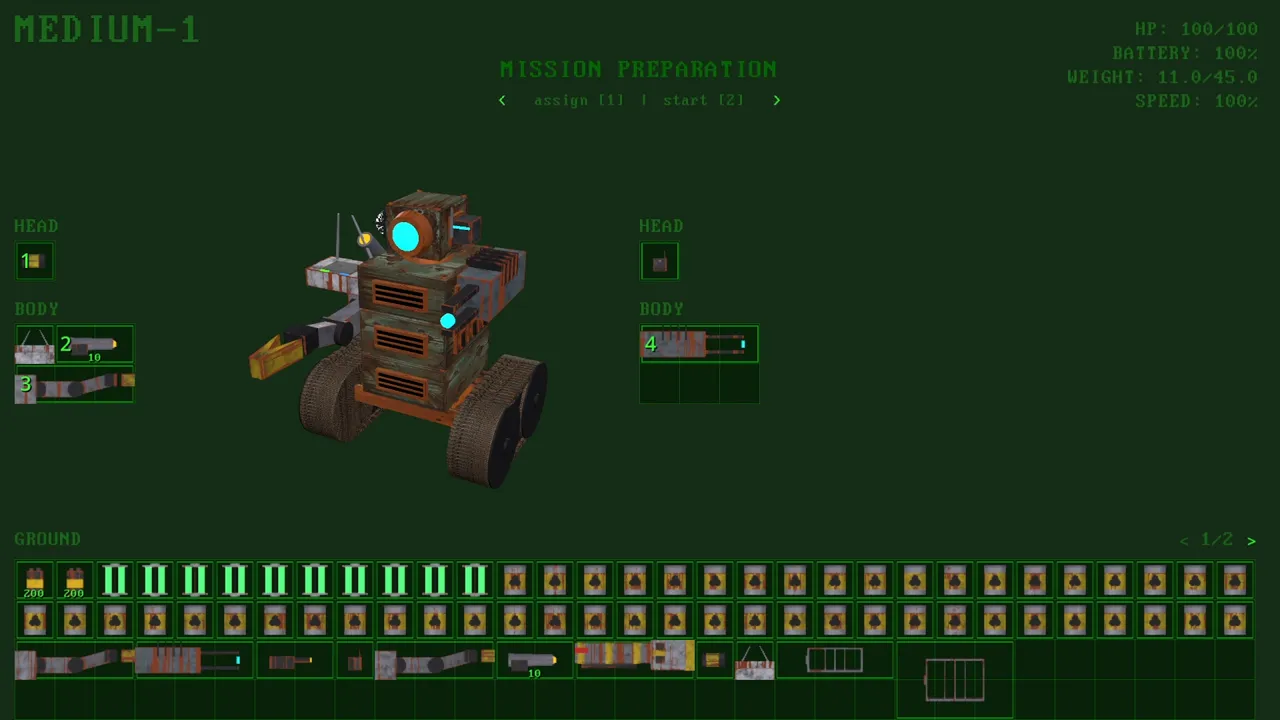 Figure 2: Forward camera feed — navigating ruptured bulkheads and monitoring environmental hazard sensors in deep silence.
4. Signal Degradation, Hard-Lock State & The Reconnect Run
Derelict starships are dense labyrinths of lead-shielded hulls, radioactive reactor housings, and sparking power conduits. As your drones venture deeper into distant compartments, their telemetry signal deteriorates:
- Signal Static & Latency: Video feeds break into CRT scanline artifacts, remote command responses lag, and telemetry pings drop out.
- Hard-Locked State: If a drone strays beyond relay antenna range or suffers an EMP backfire, its remote fail-safe engages. The drone enters a hard-locked hibernation state to protect its firmware from corruption.
- The Rescue Mission (Reconnect): A hard-locked drone is not dead, but it cannot move on its own. To salvage your stranded investment, you must steer another active unit into proximity, deploy a portable router or escort it near an auxiliary charging station, and execute a remote reboot sequence before scavengers dismantle the chassis.
5. Permadeath & Attrition: Why Every Mission Matters
In Iron Graves, when a drone's structural hull breaches and collapses, its physical parts scatter across the deck through our optimized real-time physics system. There is no magical respawn button.
If you lose your only drone equipped with a terminal hacking interface, you can no longer override sealed blast doors on that wreck. If you lose your primary hauler, you cannot extract heavy reactor cores back to the shuttle. Every decision — whether to pry open one more pressurized bulkhead or withdraw to the docking clamp with the scrap already secured — is soaked in palpable tension.
6. What Lies Ahead in Transmission #004
In our next developer transmission, we delve into the Ecology of the Void: Designing Alien Predators & Sensory Stalking AI in Godot 4 — how creatures smell bio-residue, track electrical vibrations, and hunt across 3D air ducts.
>> Transmission #004 is now live! Read about Void Ecology & Alien Predator AI →
OPERATOR ACTION REQUIRED: WISHLIST ON STEAM
Every Steam Wishlist directly boosts Iron Graves in search visibility and supports indie development. If you love deep, atmospheric tactical horror and strategic drone management, join the mission today.